The most obvious form of agriculture is usually considered to be the cultivation of crops. But every field rests on a far larger body of knowledge – informed by the science of soil, plant health, water, climate and the economic reality of farming. As the practice of agriculture changes, so does the study of it.
A B.Sc. (Hons.) Agricultural curriculum integrates scientific knowledge, practical agricultural experience, sustainability, and emerging technologies, allowing students to learn how these components fit together. This journey, as part of Agriculture Courses after 12th, in many ways starts with the crop field, but it doesn’t have to end there.
Why Agriculture Today Goes Beyond Traditional Farming?
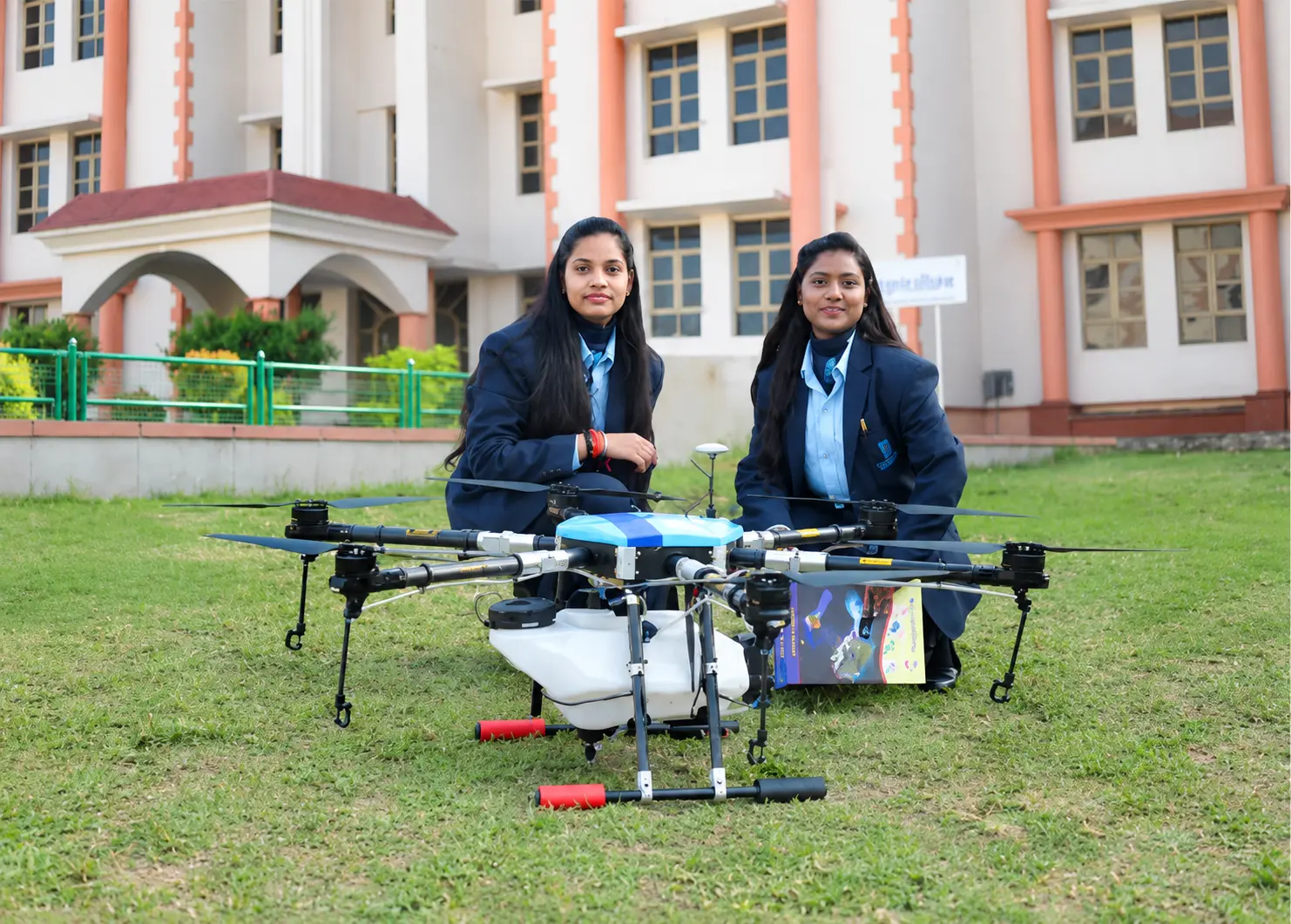
The basis of agriculture has always been a basic understanding of soil, crops, water, plant health, and climate. What has changed is how this knowledge is used. Farmers and agricultural professionals are increasingly able to use tools like remote sensing, GIS, sensors, drones, and AI to monitor field conditions more closely and make better-informed decisions.
The Government of India’s Digital Agriculture Mission reflects this growing interest in integrating digital systems and technologies into the agricultural sector. As agricultural education continues to evolve, its scope is also expanding accordingly. For students looking for Agriculture Courses beyond 12th, this means moving beyond the traditional idea of farming and recognizing how science, technology, and practical knowledge are becoming more fused in agriculture.
Understanding B.Sc. (Hons.) Agriculture: Building Knowledge from the Ground Up
A strong agriculture program needs to give students an understanding of how the diverse areas of the profession intersect. After all, raising a crop isn’t just planting seeds and waiting for a harvest. Soil quality, choice of crop variety, plant health, weather, available resources, value addition, and even the economics of farming can influence the end output.
B.Sc. (Hons.) Agriculture curriculum includes:
- Fundamentals of Soil Science
- Crop Production Technology
- Horticulture
- Plant Breeding
- Agricultural Economics.
Besides these, fields like Agri-Informatics, Farm Machinery and Power expose students to the evolving technological and operational aspects of agriculture, therefore imparting them a wider grasp of the sector as a whole.
Let’s Take a Quick Look at the Curriculum
| Learning Area | What Students Explore | Examples from UU’s B.Sc. (Hons.) Agriculture Curriculum |
| Crop & Soil Sciences | Crop production, soil health and resource management | Soil Science, Agronomy, Crop Production Technology |
| Plant Sciences | Genetics, breeding and crop improvement | Genetics, Plant Breeding, Crop Improvement |
| Plant Protection | Crop diseases and pest management | Plant Pathology, Entomology, Integrated Pest Management |
| Horticulture | Fruits, vegetables and other horticultural crops | Vegetable Production, Fruit and Plantation Crops |
| Agriculture & Business | Farm economics, finance and markets | Agricultural Economics, Finance, Marketing, Value Addition of Agricultural Products |
| Technology & Innovation | Digital and precision-oriented agriculture | Agri-Informatics, Geo-Informatics, Precision Farming |
| Sustainable Agriculture | Resource efficiency and environmentally conscious practices | Organic Farming, Watershed Management, Sustainable Agriculture |
Credit Analyst
From Conventional Farming to Smart Agriculture: Exploring the Technology Side of the Degree
Modern technologies are rapidly transforming agriculture, not to replace traditional wisdom, but to add another means of knowing what is happening in the field. A sensor can monitor some conditions, remote sensing can give a larger picture of agricultural land, and tools like GIS, drones, and artificial intelligence can help make better choices.
For students looking at Agriculture Courses after 12th, this increasing usage of technology adds one more dimension to the area. Uttaranchal University’s B.Sc. (Hons.) Agriculture course mirrors this transition by integrating Agri-Informatics, Geo-Informatics, Precision Farming, and Nanotechnology and providing electives such as Drone Technology in Agriculture and Smart Agriculture. Together, the disciplines give students an insight into how technology is gradually being integrated into farming operations.ttention to trivial information and decision making ability and requires knowledge about tools like excel, sql or credit scoring software
Why Practical Experience Matters in Agricultural Education
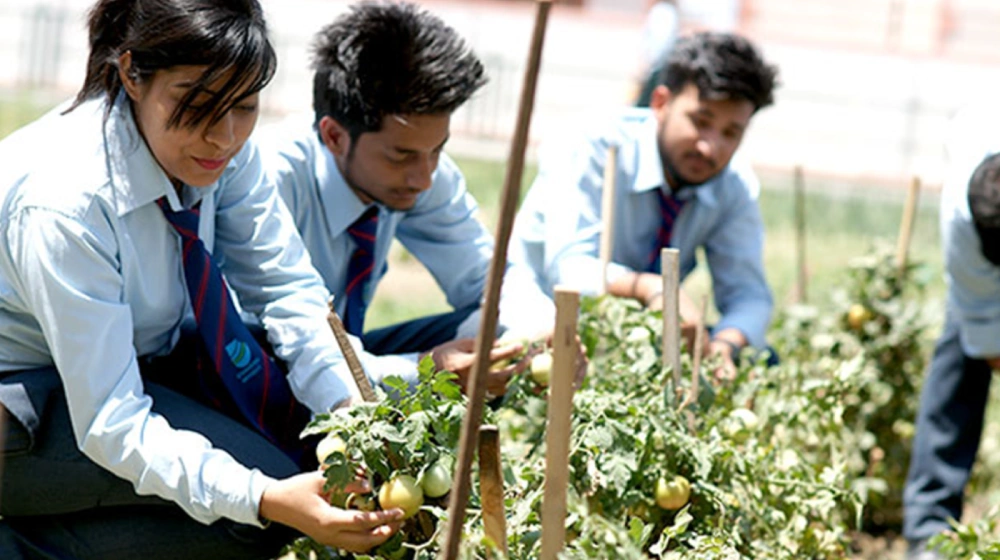
You can’t learn agriculture in a classroom. Students can read about crop production, soil, farming systems, and agricultural methods in books and seminars, but many of these principles are best understood when they are observed in practice. Theory alone does not provide the level of comprehension that a visit to a field, a day in a rural farming area, or an experience with an agricultural industry can.
This is shown in Uttaranchal University’s B.Sc. (Hons.) Agriculture curriculum with the following:
- Practical Crop Production
- Rural Agricultural Work Experience (RAWE)
- Agro-Industrial Attachment (AIA)
- Experiential Learning Programmes
These parts help extend learning beyond the classroom and into other agricultural contexts. RAWE provides students with an opportunity to bridge academic learning and practical farming experience, enabling them to understand how the concepts they learn are applied in real-world agricultural settings, as emphasized by ICAR.
How This Breadth Can Open Different Career Directions
The benefit of a comprehensive agriculture education is that it doesn’t send every student to the same destination. Some may find themselves more interested in crop production and farm management while others may choose to study subjects like soil science, plant protection, or agricultural research through higher degrees.
There are other students who are attracted to the commercial aspect of the sector, like agriculture marketing, food processing, and agribusiness. Technology and entrepreneurship can give even more choices for those comparing Agriculture Courses after 12th. Practical experience may also inspire students to take up topics such as mushroom growing, seed production, beekeeping, or protected horticulture.
These topics are included in the experiential learning options of the program at Uttaranchal University, which provides students with the opportunity to explore diverse aspects of agriculture.
How Uttaranchal University’s B.Sc. (Hons.) Agriculture Programme Brings These Areas Together
The B.Sc. (Hons.) Agriculture course in Uttaranchal University deals with many aspects of the subject as interconnected fields of learning and not as isolated fields. Students’ progress from the scientific basis of agriculture to topics concerning technology, sustainability and agricultural economics. Practical elements carry learning outside the classroom. Skill Enhancement Courses, Practical Crop Production, RAWE, Agro-Industrial Attachment and experiential learning programs provide students with the opportunity to recognize the relevance of agricultural knowledge, field operations, cultivation, and post-harvest activities.
Concluding Remarks
Choosing Agriculture Courses after 12th is more than merely selecting a course with the proper name. It is worth digging a little deeper – what students will learn, how much of that learning goes outside the classroom, and whether the curriculum ties conventional agricultural knowledge with the changes that are happening across the field.
These diverse components are included in the B.Sc. (Hons.) Agriculture program at Uttaranchal University. Students take courses in areas that develop a grasp of soil, crops, and agricultural systems as well as technology, sustainability, and economic agriculture.
Skill Enhancement Courses, Practical Crop Production, RAWE, Agro-Industrial Attachment and Experiential learning programs provide an additional dimension by taking learning into real agricultural environments. For students who regard themselves as explorers of this broad and developing topic, the curriculum has lot to offer.
Explore the programs here:
Article written by

Blog Categories
- 1
- 3
- 1
- 1
- 17
- 8
- 16
- 1
- 1
- 1
- 1
- 1
- 1
- 2
- 1
- 1
- 11