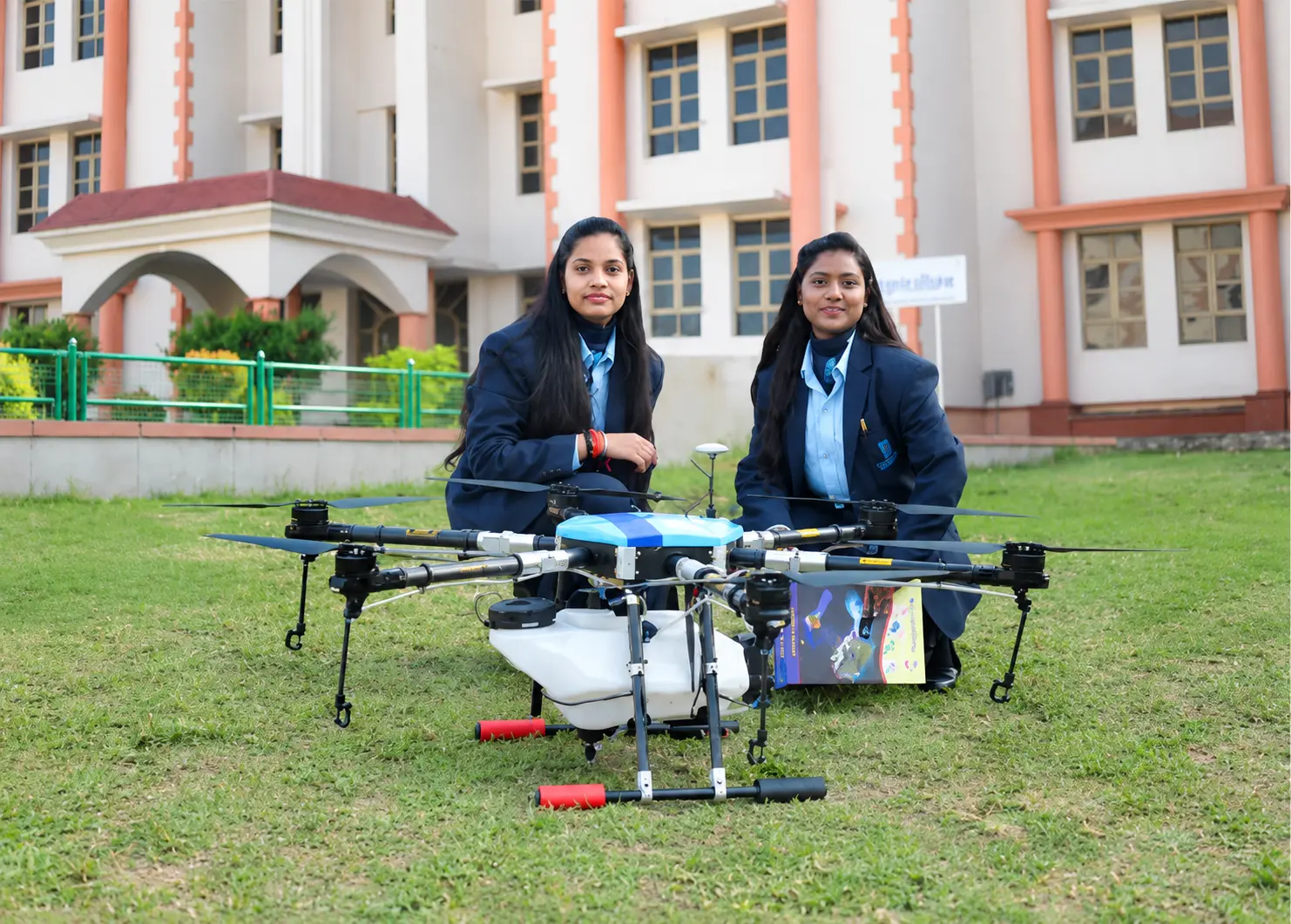
Aerospace engineering conjured up images of aircraft, rockets, and space vehicles for decades. Now drones are giving another dimension to that picture. UAVs are being used for practical purposes in a multitude of domains, from assessing crops and mapping land to inspecting bridges and accessing disaster-stricken areas.
Underneath these deceptively simple flying aircraft is a mix of aerodynamics, propulsion, electronics, materials, control systems, and software. Therefore, aeronautical engineering is more than simply the design of traditional airplanes. This transition also offers up the possibility of programs where conventional aerospace ideas can be learnt alongside newer UAV technology for students seeking Dehradun engineering colleges.
What Exactly Are Drones and UAVs?
| Term | Simple Explanation | Engineering Relevance |
| Drone | Common term for remotely or autonomously operated aircraft | Covers many civilian and commercial applications |
| UAV | Unmanned aerial vehicle operated without an onboard pilot | Focuses on the aircraft itself |
| UAS | UAV plus control station, communication links, and supporting systems | Represents the complete operating system |
How UAVs Are Expanding the Scope of Aerospace Engineering
The increasing use of UAVs is providing aeronautical engineering with a much larger canvas. Designing a drone can appear easy on the surface, but it involves the cooperation of multiple engineering disciplines to ensure it is stable, lightweight, efficient, and capable of carrying its designated payload. Aerodynamics, propulsion, structures, materials, control systems – all of them have to be made to fit into one viable design.
And this is slowly changing aeronautical education as well. Students now have the opportunity to learn the fundamentals of traditional aircraft as well as the design of UAVs, sensors, automation, and autonomous flight in the top engineering colleges in Dehradun, providing students with a greater idea of how aeronautical engineering is being applied outside of traditional aircraft.
Aerospace Areas and their Roles in UAV Development
| Aerospace Area | Role in UAV Development |
| Aerodynamics | Determines lift, drag, stability, and efficiency |
| Propulsion | Provides the thrust required for flight |
| Structures | Ensures strength while keeping weight under control |
| Flight Mechanics | Helps understand aircraft movement and stability |
| Control Systems | Enables stable and controlled flight |
| Materials | Helps improve strength, weight and durability |
Where Are Drones Being Used?
Drones today are about much more than snapping images from the air.
They help:
- Farmers with crop monitoring
- Surveyors with mapping
- Infrastructure inspections
- Access to disaster-hit areas
Each of these occupations needs a different kind of solution. Some may need longer flight duration, others steadier movement, larger carrying capacity, or specialized sensors. All this is broadening the field of aerospace engineering. It presents engineers with new challenges that extend beyond traditional aircraft design.
| Application | How UAVs Are Used |
| Agriculture | Crop monitoring and field assessment |
| Surveying & Mapping | Aerial imagery and terrain mapping |
| Infrastructure | Inspection of difficult-to-access structures |
| Disaster Management | Assessing affected areas |
| Logistics | Research and deployment of unmanned delivery systems |
| Defence & Security | Surveillance and reconnaissance applications |
What Skills Will Future Aerospace Engineers Need?
Aerospace engineering is not a subject where students can just lean on theory. They learn the fundamentals in a textbook on aerodynamics or propulsion, but design teaches how those concepts really behave. That is why lab sessions, simulations, and design projects are so important in the top engineering colleges in Dehradun.
They provide students with the opportunity to experiment, fail, and figure out what to adjust. An internship or exposure to industry provides an additional dimension to an education, illustrating how engineers deal with real limits, timelines, and practical requirements. This practical approach might help students feel more comfortable tackling the types of difficulties they could experience on aerospace and UAV projects.
Skills for Future Aerospace Engineers
| Skill | Why It Matters |
| Mathematics & Physics | Understanding flight and engineering principles |
| Aerodynamics | Designing efficient flying systems |
| Programming | Automation, data processing and control |
| CAD/Design | Developing aircraft components and systems |
| Problem-solving | Addressing design and operational challenges |
| Testing & Analysis | Evaluating performance and safety |
Why Practical Learning Matters in Aerospace Engineering
Aerospace engineering is one of those fields where you can read about a notion, and that is only the beginning. Students gain a deeper understanding of aerodynamics, propulsion, aircraft structures, and materials by engaging in hands-on activities that allow them to observe and experience how these principles work in practice.
The Aerospace Engineering program at Uttaranchal University combines classroom instruction with laboratory work, projects, and UAV-related activities. Internships and industry exposure provide students with valuable insights into real-world engineering processes. Students exploring engineering colleges in Dehradun may find this practical approach particularly beneficial, as it helps them develop confidence in applying their academic knowledge to real-world situations.
Quick Points to Choosing an Aerospace Engineering Programme with UAV Exposure
- Aerospace-focused curriculum
- UAV and drone subjects
- Well-equipped aerospace laboratories
- Hands-on project opportunities
- Experienced aerospace faculty
- Industry interaction and exposure
- Internship and training opportunities
- Research-focused learning environment
- Higher studies pathways
- Strong practical learning approach
UU Doon: Preparing for the Next Generation of Aerospace Engineering
Drones are not introducing entirely new concepts to aircraft engineering. In fact, they are creating more work for engineers, from flight control and propulsion to structures, electronics, and software. This makes practical learning very relatable for those looking for engineering colleges in Dehradun.
UU Doon’s B.Tech. Aerospace Engineering curriculum blends fundamental aerospace topics with laboratory work, projects, and UAV-related learning, offering students the opportunity to connect classroom concepts with real-world applications and establish a basis for the evolving aerospace industry.
Article written by

Blog Categories
- 1
- 3
- 1
- 1
- 17
- 8
- 16
- 1
- 1
- 1
- 1
- 1
- 1
- 2
- 1
- 1
- 11